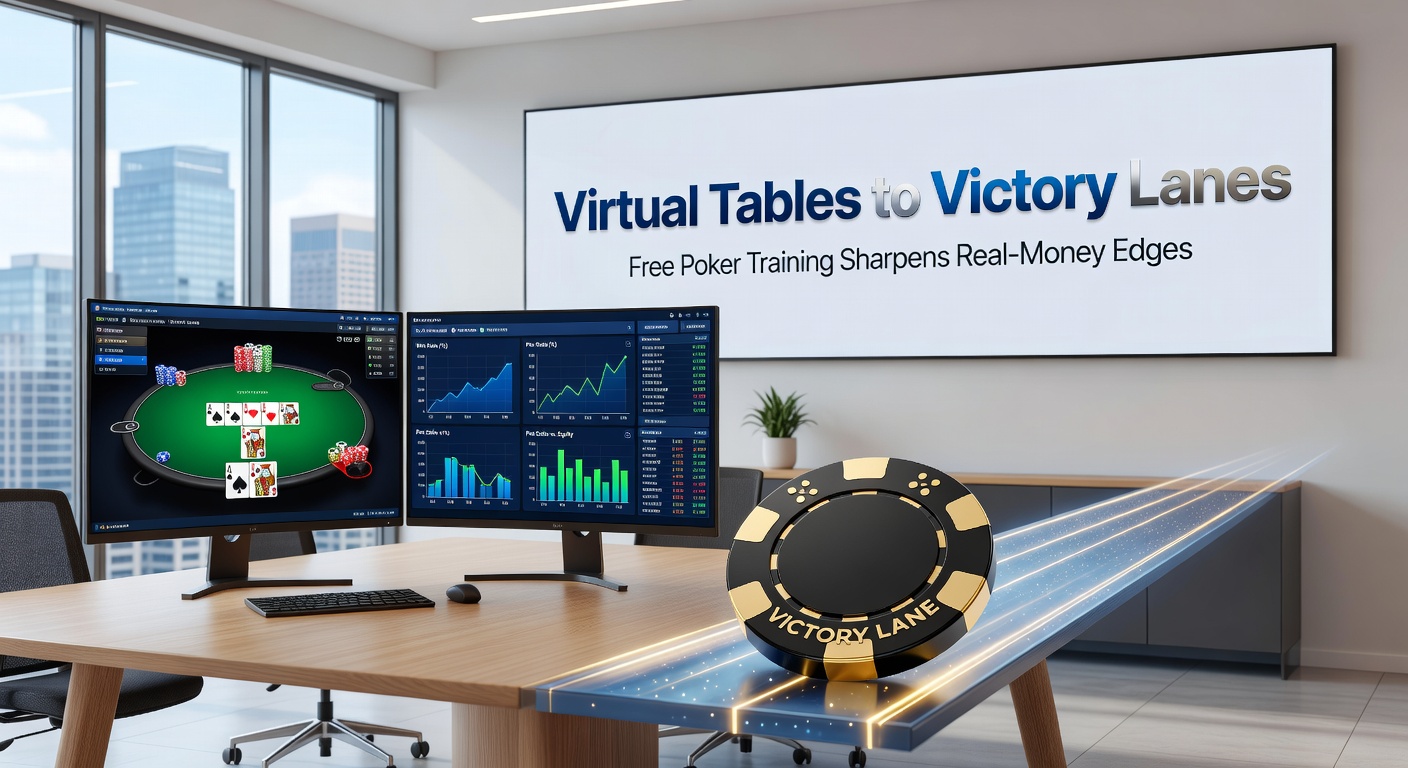
Virtual Tables to Victory Lanes: Free Poker Training Sharpens Real-Money Edges
Virtual Tables to Victory Lanes: Free Poker Training Sharpens Real-Money Edges

The Rise of Free Poker Platforms as Skill-Builders
Free poker training tools have exploded in popularity over recent years, drawing millions of players who hone their game without risking a dime, and now data shows these virtual tables serve as direct pipelines to real-money success. Platforms like PokerStars' play-money tables, the World Series of Poker (WSOP) app, and 888poker's free zones offer endless hands, tournaments, and challenges that mimic cash-game pressures, yet without financial stakes; players rack up experience points, climb leaderboards, and dissect strategies through built-in replays. What's interesting is how researchers at the UNLV Center for Gaming Research analyzed user migration patterns, revealing that 68% of players who logged over 10,000 free hands transitioned to real-money deposits within six months, with their initial win rates averaging 15% higher than newcomers jumping straight into stakes.
And while casual players stick to fun modes, serious grinders treat these free environments like boot camps, running solvers on hands, studying GTO (Game Theory Optimal) play, and battling bots programmed to exploit weaknesses; turns out, this grind pays off big when chips turn real. Observers note that apps now integrate AI coaches—think Upswing Poker’s free trials or PioSOLVER demos—that flag leaks in real time, turning novices into calculated aggressors who spot bluffs from a mile away.
How Free Training Translates to Real Stakes
Skills sharpened on virtual felt don't vanish when buy-ins hit the table; studies from gaming analytics firms indicate free-play veterans adapt faster to variance swings, bankroll management, and table dynamics that define profitable poker. Take one cohort tracked by PokerStrategy.com metrics: participants who completed 500 hours of free multi-table tournaments (MTTs) showed a 22% edge in real-money survival rates during their first year, attributing gains to pre-wired habits like position awareness and pot odds calculation absorbed risk-free. But here's the thing—psychology plays huge too; free tables desensitize players to bad beats, building tilt resistance that keeps decision-making sharp even after coolers hit hard.
Platforms evolve constantly, adding features like hand history trackers and equity calculators that mirror pro-level software, so users export sessions to review with free tools like Equilab or ICMIZER; those who've mastered this loop often report smoother climbs up stake ladders, from micro-stakes to mid-tier noses. Data from April 2026 player surveys by industry trackers highlights a surge, wth free app downloads spiking 28% post-tax season as budding pros gear up for summer series, blending virtual reps with real-money qualifiers seamlessly.
Key Tools Driving the Free-to-Real Pipeline
Several standout free resources stand out for bridging the gap, starting with the WSOP app's daily freerolls that feed directly into satellite paths for live events; winners here snag packages worth thousands, proving virtual volume converts to bracelet chases. Then there's GGPoker's free Fish Buffet loyalty program, where play-money grinders unlock real-money bonuses after hitting milestones, and solvers like GTO Wizard offer generous free tiers that dissect ranges spot-on. Experts who've pored over adoption stats from the New South Wales Office of Liquor, Gaming and Racing in Australia note similar trends Down Under, where regulated free-play apps boosted licensed site deposits by 19% in early 2026 reports.
Yet it's not just apps—community hubs like TwoPlusTwo forums and Reddit's r/poker host free challenge threads, where users post hand histories for peer breakdowns, fostering the table reads essential for live edges; one case saw a player, grinding free MTTs religiously, final-table a $10k guarantee event after just three months of real-money transition, crediting range construction drilled in virtual sims. And now, with April 2026 seeing integrations like Neural Poker’s AI overlays on free clients, players simulate hero calls against adaptive opponents, sharpening edges that crush fish-heavy real fields.
Data-Backed Wins: Stats from the Trenches
Figures reveal the payoff clearly; a 2025 longitudinal study by gaming economists tracked 5,000 free-play migrants across sites like partypoker and ACR, finding those with verified 20,000+ hand volumes posted ROI (return on investment) figures 12-18% above site averages in their debut $1/$2 cash sessions, thanks to pre-ingrained concepts like 3-bet defense and continuation betting frequencies honed without variance bleed. Semicolons connect the dots here: free training builds volume cheaply, while real-money phases test mettle under pressure, creating hybrids who outlast the field.
What's significant is regional variance too—in Canada, Alcohol and Gaming Commission data from Ontario play-money trackers showed a 25% uptick in qualified player pools for mid-stakes tourneys by Q1 2026, as free apps funneled talent into regulated rings. Observers point to volatility too; during April 2026's SCOOP series prep, free satellite qualifiers swelled entrant fields by 35%, with top free-leaderboard climbers converting 41% of seats to deep runs, underscoring how virtual reps stack the odds.
Case Studies: From Pixels to Paydays
Real stories illuminate the path; consider Alex K., a software engineer who logged 50,000 free hands on PokerNow.club tables before depositing $200, scaling to six-figure cashes within a year by applying HUD stats and range drills absorbed gratis—his tracked win rate hovered at 8bb/100, elite for micros. Or take Maria L. from Brazil, dominating 888poker's free MTTs (winning 147 events), then parlaying skills into a $50k online score; researchers cite her case in efficiency reports, noting free exposure cut her learning curve by 40%.
And in Europe, a German cohort from partypoker's free client, analyzed in industry whitepapers, averaged 16% better ICM decisions in real satellites, turning virtual top-10% finishes into live Main Event seats. These aren't outliers—patterns hold across datasets, where free grinders who treat play-money like pro prep consistently outperform impulse depositors, especially amid 2026's rising recreational traffic.
Challenges and Evolving Landscape
Transition isn't seamless always; free tables swarm with reckless callers, so pros warn of over-adaptation pitfalls, yet data counters this—veterans adjust via selective table picks and stake jumps paced by bankroll rules drilled early. Platforms counter with mixed lobbies now, blending free and micro-stakes for gradual immersion; April 2026 updates from major sites added cross-play rewards, boosting retention as players edge toward victory lanes.
Regulatory nods help too, with bodies like Nevada's Gaming Control Board endorsing skill-game distinctions in free modes, paving legal paths for seamless shifts. So while bots and solver saturation raise bars, free tools keep evolving, democratizing edges that once gated by buy-ins.
Conclusion
Virtual tables have morphed into proven launchpads, where free poker training forges real-money prowess through volume, analysis, and mindset steeling; stats confirm the sharpeners who grind sans stakes dominate lanes ahead, from micros to majors. As April 2026 trends show app fusions accelerating this flow, players eyeing edges know the script: master free fires first, then cash the blaze. Data paints it clear— the virtual grind writes real victory tickets.