Tracing Accumulated Value Transfers from Simulated Reel Activities to Interactive Group Card Sessions in Wireless Environments
Written by Paul Meier · Aug 16, 2026
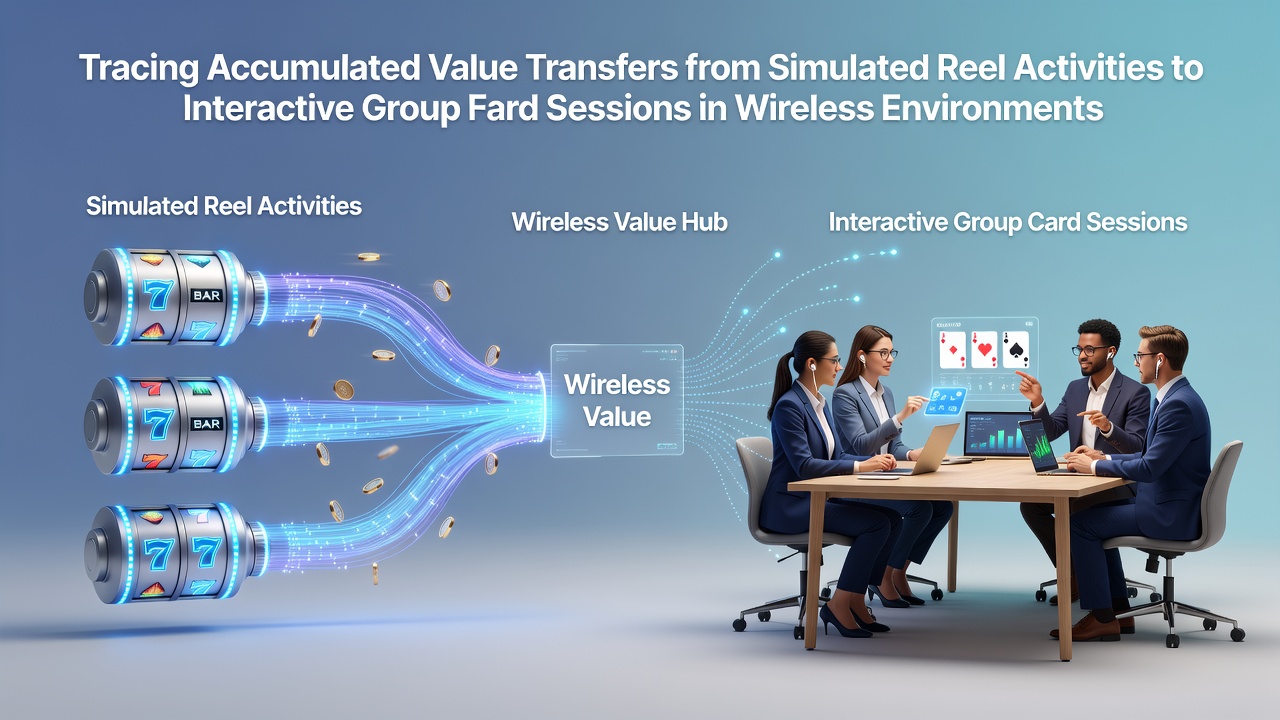
Tracing Accumulated Value Transfers from Simulated Reel Activities to Interactive Group Card Sessions in Wireless Environments
Systems that move accumulated credits from simulated reel sessions into interactive group card environments operate through layered protocols designed for wireless networks, and these mechanisms have gained attention in industry reports released during August 2026. Data from multiple operators shows that players often accumulate virtual balances on reel-based applications before redirecting portions of those balances toward multiplayer card formats, with wireless connectivity serving as the primary channel for synchronization across devices.
Mechanics of Value Accumulation in Reel Simulations
Simulated reel activities generate credits through standard random number generator outputs, and these credits remain stored within player accounts until a transfer request initiates movement toward card-based sessions. Research indicates that reel mechanics rely on predefined payout tables and volatility settings, which determine how quickly balances build during extended play periods on mobile platforms. Operators track these accumulations using backend ledgers that update in real time across cellular and Wi-Fi connections, allowing seamless handoff when users switch to group card tables.
Wireless environments introduce variables such as latency and packet loss, yet current protocols incorporate error-correction routines that maintain balance integrity during transfers. Figures from equipment suppliers reveal that session handoffs complete in under three seconds on 5G networks in major metropolitan areas, whereas older 4G connections require additional verification steps to prevent duplication of credit values.
Transition Pathways to Group Card Interactions
Once accumulated values reach predetermined thresholds, automated prompts appear within the application interface, and these prompts guide users toward available interactive card sessions without requiring manual balance entry. The transition process links reel-derived credits directly to card tournament entry fees or side bets, creating a continuous flow that keeps players engaged across different game types on the same device. Observers note that this linkage relies on application programming interfaces shared between reel modules and card platforms, with authentication tokens ensuring that only verified balances participate in group activities.

Group card sessions themselves operate on synchronized servers that handle multiple participants simultaneously, and incoming transferred values integrate into pot calculations or buy-in structures without disrupting ongoing rounds. A study conducted by the Canadian Centre for Gaming Research found that players who route reel credits into card events maintain longer overall session durations compared with those who begin directly in card formats, though the report stops short of attributing causation to the transfer feature itself.
Wireless Infrastructure and Data Integrity
Wireless carriers have expanded coverage for low-latency applications, which supports the real-time verification steps needed when moving value between game categories. Encryption standards applied during these transfers meet or exceed requirements set by regional gaming authorities, and audit logs capture each movement for compliance purposes. In August 2026 several North American operators updated their systems to incorporate enhanced tokenization methods, reducing the window during which intermediate values remain visible on network traffic.
Geolocation checks further restrict transfers to jurisdictions where both reel and card products hold valid licenses, preventing cross-border discrepancies that could arise from differing regulatory frameworks. Industry associations such as the American Gaming Association have documented these infrastructure improvements in quarterly summaries, highlighting how wireless reliability contributes to higher completion rates for credit movements.
Player Account Management Across Platforms
Centralized wallet systems serve as the intermediary layer, storing reel-derived balances until users elect to allocate portions toward card sessions, and these wallets update across all linked devices through cloud synchronization. Multi-factor authentication accompanies each transfer request, while spending limits set at the account level apply uniformly regardless of whether the balance originated from reel simulations or direct deposits. Data compiled by academic researchers at the University of Nevada, Las Vegas indicates that account-level controls reduce instances of rapid balance depletion when players move between game types on portable hardware.
Session history records capture the origin of transferred values, enabling operators to generate detailed reports that separate reel activity from subsequent card participation for analytical purposes. Such separation proves useful during regulatory reviews, where authorities examine patterns of play across wireless environments without conflating distinct product categories.
Conclusion
Tracing accumulated value transfers from simulated reel activities to interactive group card sessions in wireless environments involves coordinated backend systems, secure network protocols, and centralized account management tools that operate under established licensing conditions. Reports issued through August 2026 confirm ongoing refinements to transfer speeds and verification processes, while geographic restrictions and encryption standards continue to shape how these movements occur across mobile platforms. Additional studies from institutions in Australia and Canada provide comparative data on session patterns, offering operators measurable benchmarks for system performance without introducing subjective interpretations of player behavior.