How Accumulated Demo Credits Facilitate Transitions into Interactive Live Dealer Card Tournaments via Mobile Interfaces
Written by Paul Meier · Jul 14, 2026

How Accumulated Demo Credits Facilitate Transitions into Interactive Live Dealer Card Tournaments via Mobile Interfaces
Demo credits function as practice currency within mobile casino platforms, allowing users to build balances through repeated free sessions on card games before converting those amounts into entry fees for live dealer tournaments. These credits accumulate based on play volume, win rates, and platform-specific multipliers that reward consistent engagement without requiring initial deposits.
Mechanics of Credit Accumulation on Mobile Platforms
Players start with standard demo allocations on blackjack or poker variants, where each completed hand or round adds to a tracked balance that persists across sessions, and mobile apps integrate progress bars that display remaining thresholds needed for tournament qualification. Data from industry reports shows that users who maintain daily logins see their demo balances grow through bonus multipliers tied to consecutive activity streaks, creating pathways that link casual practice directly to competitive events.
Interface adaptations track accumulated credits in real time, displaying conversion options that appear once balances reach minimum tournament entry levels, while algorithms adjust credit earnings based on game volatility to encourage longer practice periods before live transitions occur. Observers note that these systems operate across major operators, with July 2026 seeing expanded mobile updates that streamlined credit tracking for users in multiple jurisdictions.
Pathways from Practice to Live Dealer Events
Once demo credits reach qualifying amounts, mobile interfaces present direct links to live dealer card tournaments where those credits convert into entry stakes, eliminating separate deposit requirements and allowing seamless movement from simulated tables to real-time streamed games with professional croupiers. Research indicates that this credit-based entry model increases participation rates because it removes financial barriers that traditionally separate free play from paid competitions.
Live dealer platforms receive the converted credits as tournament buy-ins, and participants join interactive sessions featuring multiple tables, chat functions, and progressive prize structures that scale with total accumulated demo volume. According to figures from the American Gaming Association, mobile tournament entries funded through demo conversions rose steadily through the first half of 2026, reflecting broader adoption of these integrated systems.
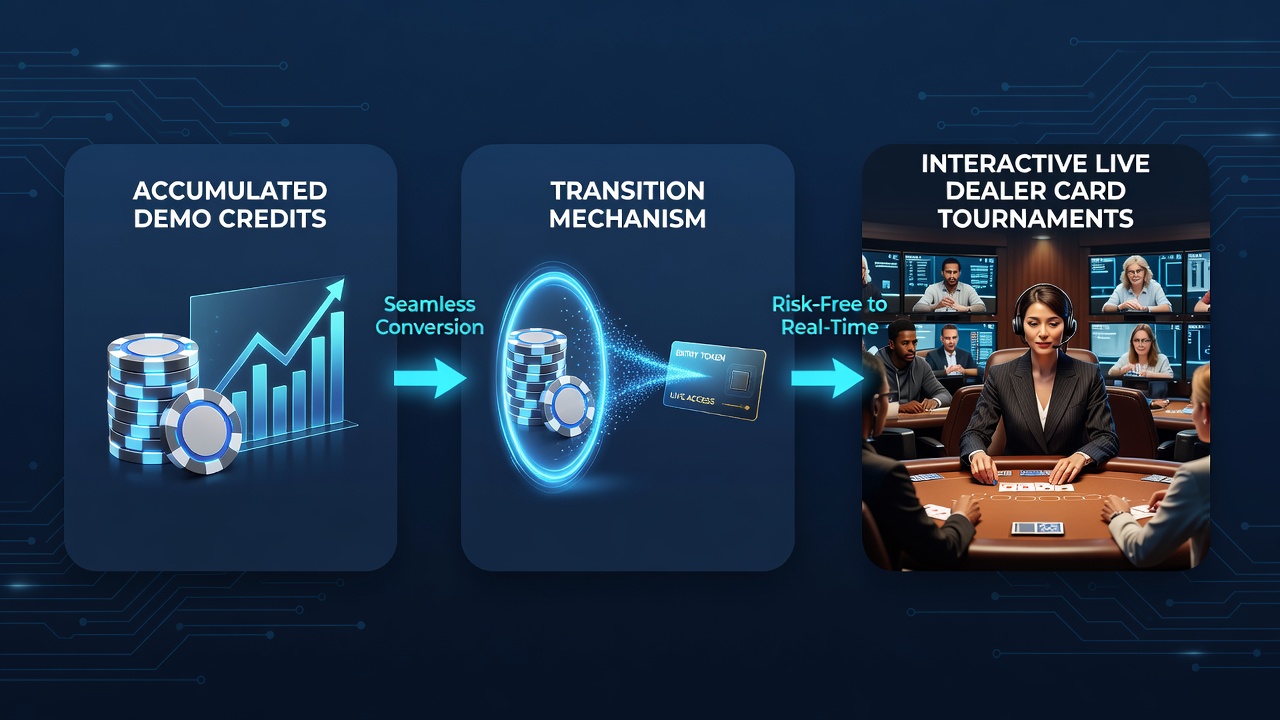
Conversion happens through in-app prompts that verify credit totals against tournament schedules, and successful transitions maintain user history so that performance metrics from demo sessions influence initial seeding in live brackets. This continuity helps maintain engagement patterns while shifting users into environments that feature real stakes and social interaction components absent from practice modes.
Technical Features Supporting Seamless Transitions
Mobile interfaces incorporate secure authentication layers that link demo accounts to live tournament registrations without requiring users to exit the application, and push notifications alert players when accumulated credits meet entry criteria for upcoming events. These features rely on backend systems that synchronize balances across demo and live environments, ensuring credits remain valid during the shift to dealer-hosted tables.
Additional tools include tutorial overlays that activate during the transition process, guiding users through tournament rules while preserving their credit-derived entry status, and data shows these guided pathways reduce drop-off rates between practice and live participation. Platform developers continue refining these elements to handle higher volumes of concurrent mobile users, particularly as tournament calendars expand in July 2026.
Regulatory Context and Platform Compliance
Operators adhere to jurisdictional requirements that govern how demo credits convert into tournament entries, with oversight from bodies such as the Nevada Gaming Control Board ensuring transparency in credit valuation and transfer processes. Compliance protocols require clear disclosure of conversion rates and eligibility rules within mobile apps, preventing mismatches between accumulated demo amounts and actual tournament stakes.
Industry organizations track these practices to maintain consistent standards across regions, and reports from the Canadian Gaming Association highlight how mobile-specific credit systems align with broader responsible gaming frameworks that apply to both demo and live play. These alignments support continued development of tournament formats that accept demo-derived entries without introducing new compliance risks.
Conclusion
Accumulated demo credits create structured entry points into live dealer card tournaments by integrating practice balances wth mobile interface tools that handle conversions, notifications, and account continuity. Technical adaptations and regulatory compliance together enable these transitions, supporting increased mobile participation in competitive card events throughout 2026 and beyond.